
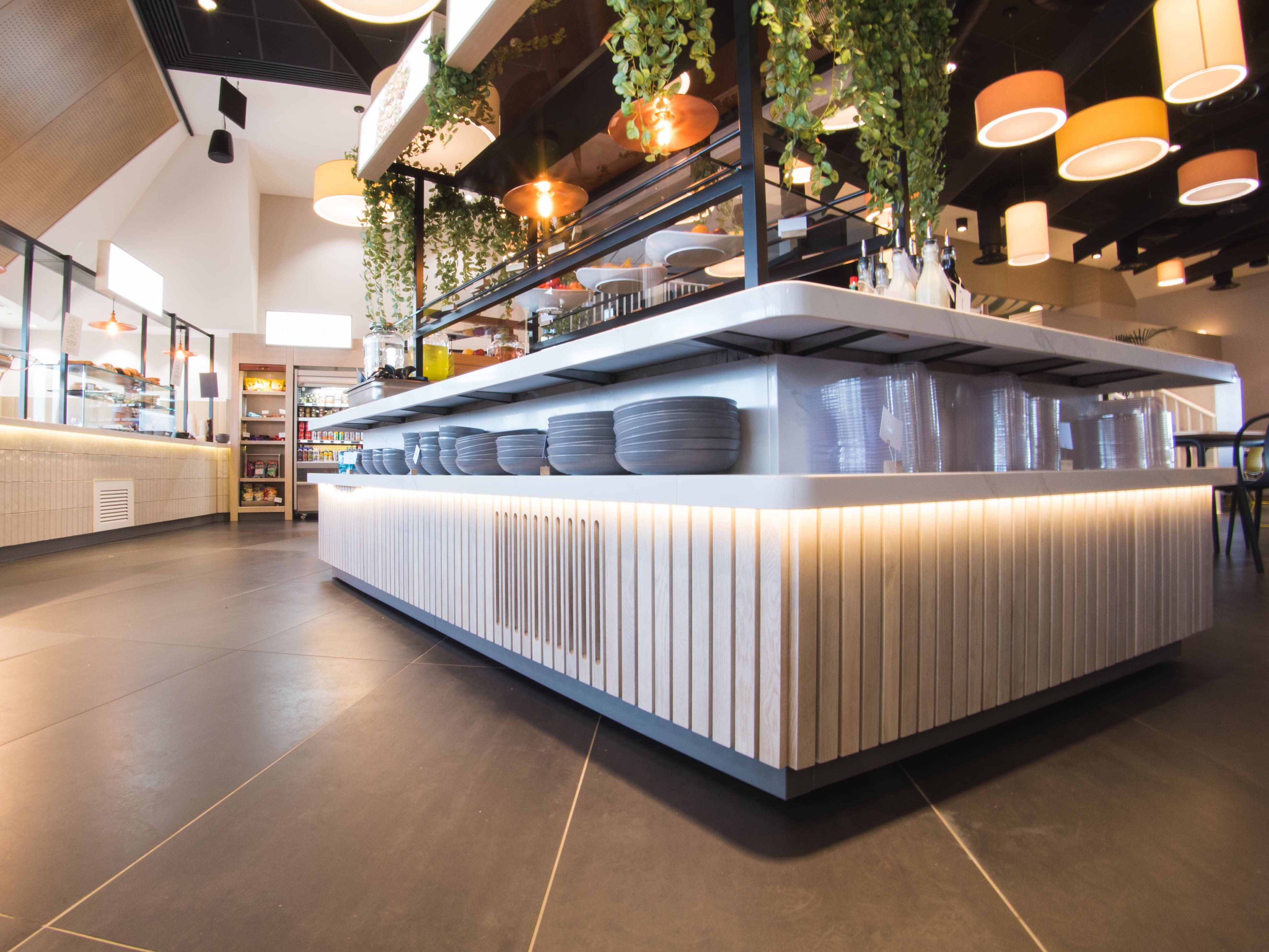
An off-the-shelf counter has one fairly obvious advantage: you know what you’re getting.
There are set dimensions, a predetermined layout and a selection of available finishes. If one happens to fit the space and do exactly what’s required, that may be all a project needs.
Hospitality spaces, however, have a habit of being more complicated than that.
An awkward column lands exactly where the counter needs to go. The architect has specified a particular curve. Refrigeration needs to sit alongside a hot display. The operator wants customers to follow a particular route. Suddenly, finding a standard unit that’s almost right means making compromises elsewhere.
Bespoke food counters take the opposite approach. Instead of adapting the venue to the counter, the counter is made for the venue.
Making Better Use of the Space You’ve Got
Commercial floor space is valuable, and leaving unusable gaps around standard-sized equipment isn’t ideal.
Bespoke manufacturing allows counters to follow the dimensions of the room, work around structural features and make use of areas that might otherwise be wasted.
That doesn’t necessarily mean filling every available centimetre. Sometimes the better decision is creating more room for staff movement or opening up a customer walkway.
The difference is that those decisions can be made specifically for the project rather than dictated by standard dimensions.
Equipment Can Be Part of the Design
Food counters rarely operate on their own.
Depending on the venue, the finished installation could need refrigeration, heated displays, sinks, storage, point-of-sale equipment or specialist catering appliances.
With bespoke food counters, those requirements can be incorporated during the design stage.
Instead of lining up separate pieces of equipment and trying to make them look related afterwards, the different elements can form part of one coordinated counter.
For customers, that creates a cleaner appearance. For staff, it can mean a much more practical workspace.
Staff Don’t Have to Work Around the Counter
It’s easy to judge a food counter from the front.
Stand behind it during a lunchtime rush and you’ll get a very different perspective.
Staff need ingredients, equipment and storage to be where they expect them. If two people constantly have to cross paths or walk to opposite ends of the counter for basic tasks, small inefficiencies quickly add up.
Bespoke design gives operators the opportunity to think about:
- Who will be working behind the counter
- Which tasks happen most frequently
- Where stock is stored
- How products are replenished
- Where customers order, pay and collect
The result should be a counter designed around real service rather than an idealised floor plan.
You Have Far More Control Over Appearance
Food counters aren’t confined to kitchens anymore.
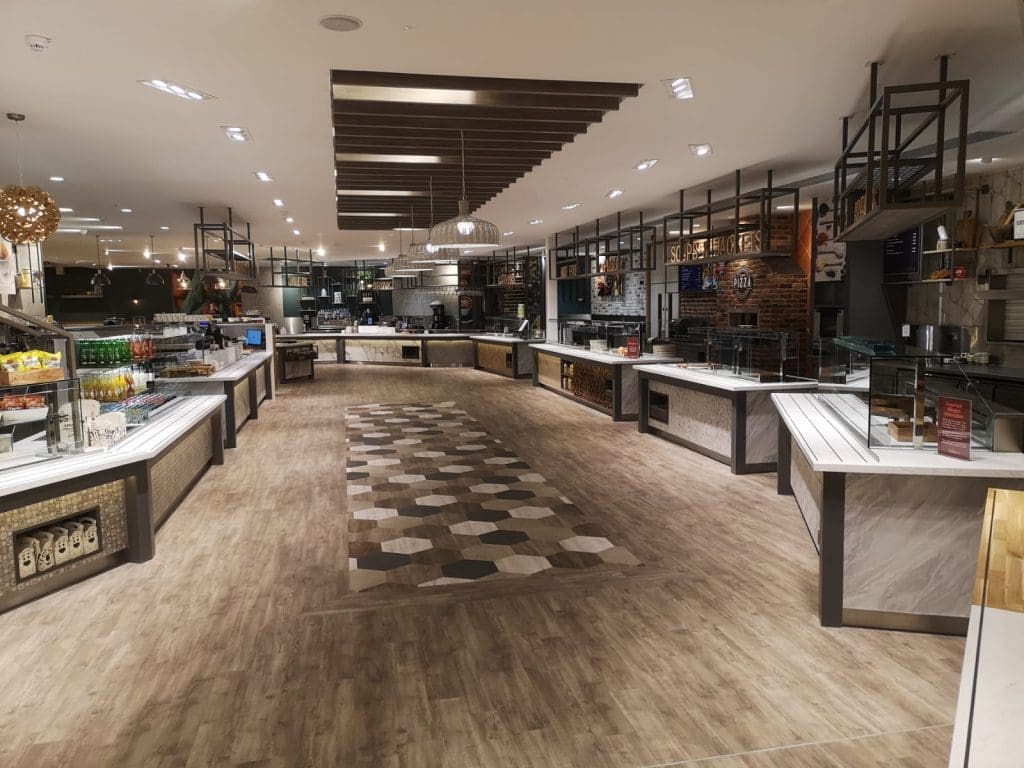
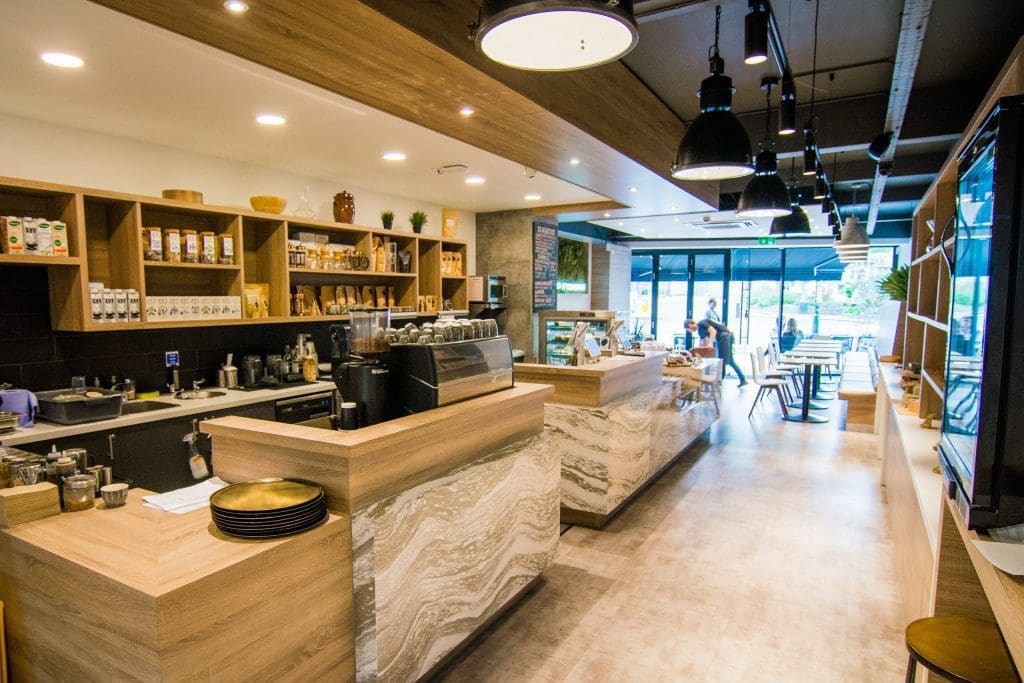
In restaurants, hotels, cafés, workplace dining spaces and food halls, they often occupy a prominent position in front of customers. That makes their appearance part of the wider interior.
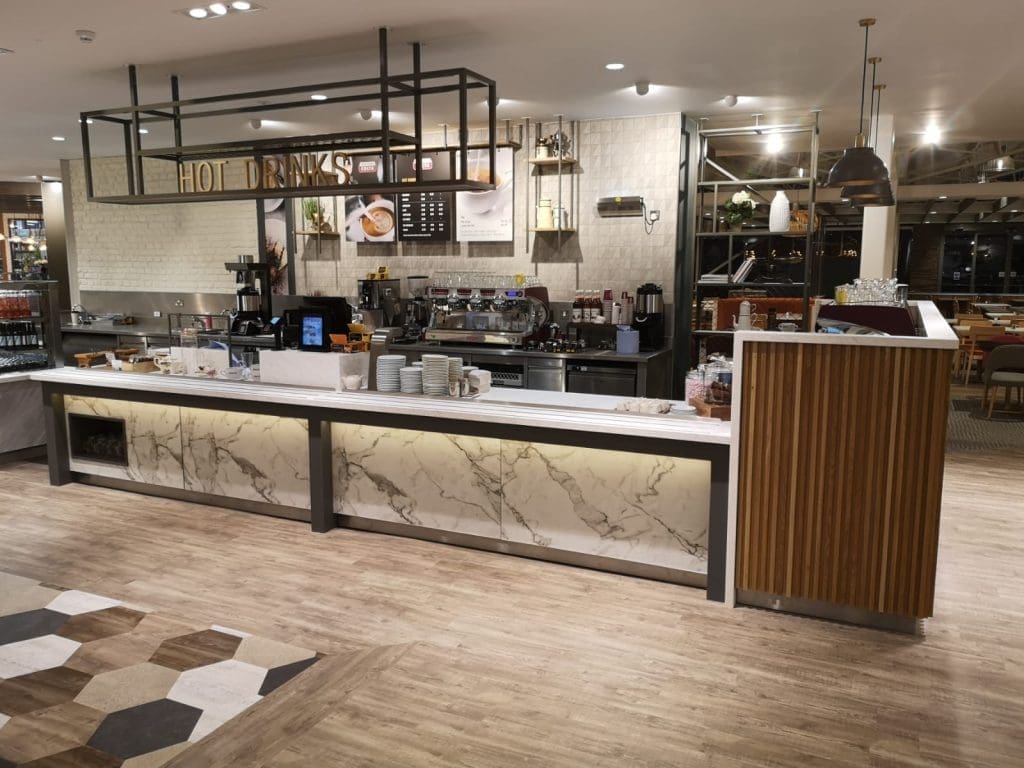
Going bespoke opens up far more choice over shape, materials, finishes and detailing.
A project might combine a solid surface worktop with decorative laminate fronts and stainless steel working areas. Another could call for stone, timber effects, feature lighting or a completely different combination.
Proline works with a wide range of materials, allowing bespoke food counters to follow the design intent of the wider project rather than looking like catering equipment added at the end.
Hot, Cold and Ambient Can Work Together
A food offer rarely fits neatly into one category.
There might be chilled salads next to ambient bakery products, with hot dishes being served only a short distance away.
With separate standard units, creating a consistent run can be difficult. Differences in heights, finishes and dimensions can make the individual sections feel disconnected.
Bespoke counters allow different functions to sit within a unified design. Refrigerated displays, heated sections and ambient presentation can all be considered as part of the same installation.
This can be particularly useful in larger serveries and food halls where customers encounter several different food offers along one route.
They’re Made for the Project, Not the Catalogue
One of the less obvious advantages of bespoke manufacturing is simply having fewer arbitrary limitations.
Need a particular height? An unusual corner? Extra-deep storage? A curved customer-facing section? Equipment positioned in a very specific location?
Those decisions can form part of the brief.
At Proline, projects are developed alongside operators, designers, consultants, architects and contractors, allowing the counter specification to respond to the wider project rather than existing separately from it.
Does Bespoke Mean More Expensive?
Not automatically, although bespoke and standard counters aren’t particularly useful to compare on purchase price alone.
The cost of a bespoke food counter depends on its size, materials, equipment, complexity and specification. A straightforward custom counter and a highly detailed hospitality installation are two very different projects.
The more useful question is whether the counter delivers value for the venue.
Making better use of space, improving workflow, incorporating equipment correctly and specifying suitable materials can all contribute to how successfully the counter performs throughout its working life.
FAQs About Bespoke Food Counters
What is a bespoke food counter?
A bespoke food counter is designed and manufactured specifically for an individual project rather than being produced to predetermined standard dimensions. Its size, layout, materials, equipment and display requirements can all be tailored to the venue.
What are the main benefits of bespoke food counters?
The main advantages include greater control over dimensions and appearance, better use of available space, integrated equipment and displays, and the ability to design around staff workflow and customer movement.
Can bespoke food counters include hot and cold displays?
Yes. Bespoke counters can incorporate refrigerated, heated and ambient food display sections according to the requirements of the venue.
Where are bespoke food counters used?
They can be found across restaurants, cafés, hotels, food halls, universities, workplace catering, leisure venues and other commercial foodservice environments.
What materials can be used for bespoke food counters?
The specification can include stainless steel, solid surfaces, laminates, stone, timber-effect finishes and numerous other materials. Different materials can also be combined within a single counter.
Who manufactures bespoke food counters in the UK?
Proline designs and manufactures bespoke food counters for hospitality and commercial foodservice projects across the UK, working with project teams to create counters around their individual operational and design requirements.
When Standard Isn’t Quite Right
The biggest benefit of going bespoke is choice.
You’re not restricted to the closest available size, a fixed equipment position or a handful of standard finishes. The counter can instead respond to the building, the food offer, the people working behind it and the customers using the space.
For hospitality venues where the counter plays an important part in both service and interior design, that flexibility can make a considerable difference.
Proline manufactures bespoke food counters for hospitality and foodservice projects throughout the UK, from individual counters to larger front-of-house installations. If you have a project where a standard solution won’t quite do the job, contact the Proline team to discuss a counter built around what you actually need.