
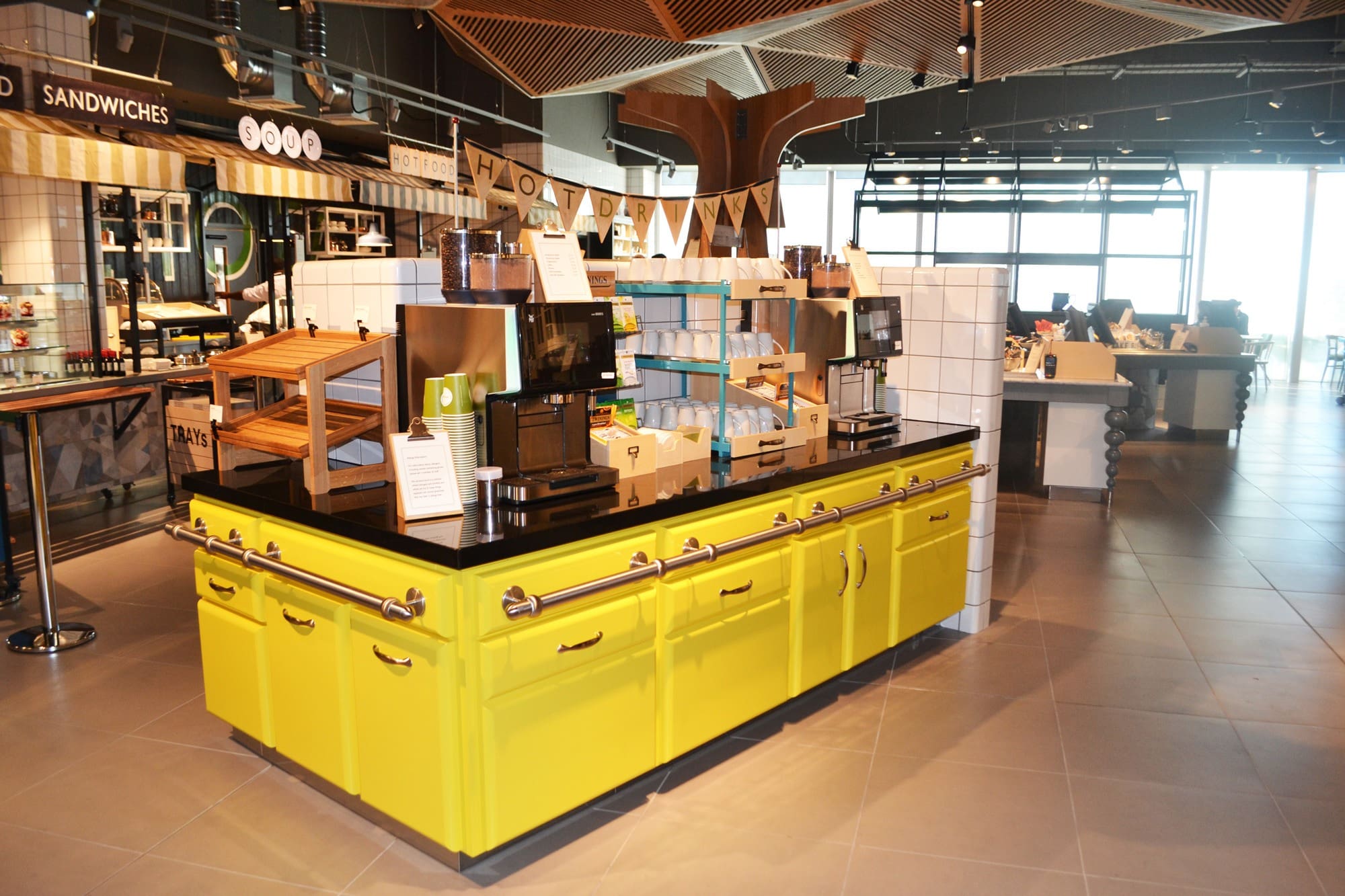
Ask ten café owners what they need from their counter and you’ll probably get ten slightly different answers.
For one, the priority might be getting customers through a morning coffee queue as quickly as possible. Another may rely heavily on cakes, sandwiches and chilled food sales. Somewhere else, takeaway orders might account for half the day’s trade.
That’s why café counters shouldn’t really begin with a list of standard components. They should begin with a much simpler question: how does this particular café work?
A bespoke café counter can then be built around the answer.
Start With What You’re Actually Serving
Before thinking about finishes, colours or even the shape of the counter, look at the menu.
A coffee-led operation will need plenty of thought given to the espresso machine, grinders, milk refrigeration, knock boxes and cup storage. A café with a substantial food offer might need refrigerated displays, heated sections or space for preparing and plating dishes.
Even small details matter. Where are teaspoons kept? Where do dirty cups go? How far does someone have to move to get milk from the fridge?
On their own, these seem insignificant. Repeat an unnecessary movement hundreds of times during a busy shift and suddenly they aren’t.
Coffee Equipment Needs More Than Just Counter Space
Putting an espresso machine on top of a counter isn’t the same as designing a coffee station.
The machine itself needs services, but staff also need quick access to everything surrounding it. Grinders, milk, cups, syrups, waste and cleaning equipment all need sensible positions.
For busy cafés, it’s worth considering:
- How many people will work at the coffee station?
- Where will clean and used cups go?
- Is refrigeration within easy reach?
- Can supplies be replenished without interrupting service?
- Is there enough working space around the equipment?
With bespoke café counters, these requirements can be accounted for before manufacturing begins rather than accommodated afterwards.
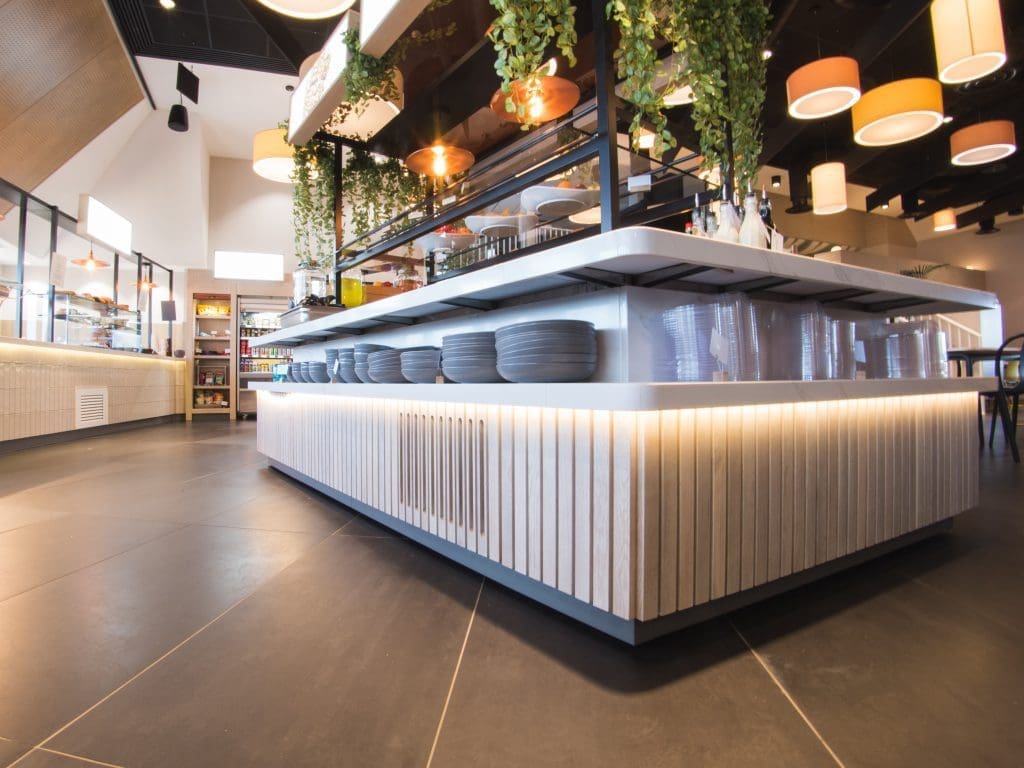
Give Food Displays a Proper Place
Cakes hidden around a corner aren’t going to sell themselves.
Food displays work best when they’re positioned somewhere customers naturally look while ordering. Depending on the menu, this could include ambient cake displays, refrigerated sections, heated displays or a combination of several types.
The display also needs to make sense operationally. Staff should be able to replenish products without fighting through a queue or repeatedly walking around the counter.
Proline can incorporate food displays directly into bespoke café counters, allowing the display, worktop and surrounding cabinetry to form one coordinated installation.
Storage: You Almost Always Need More Than You Think
Storage isn’t the most exciting part of café design, but running out of accessible space during service gets irritating very quickly.
Cups, takeaway packaging, napkins, cleaning products, ingredients and general supplies all need somewhere to live.
Good counter storage keeps frequently used items close to where they’re needed without filling the working area with cupboards that get in the way.
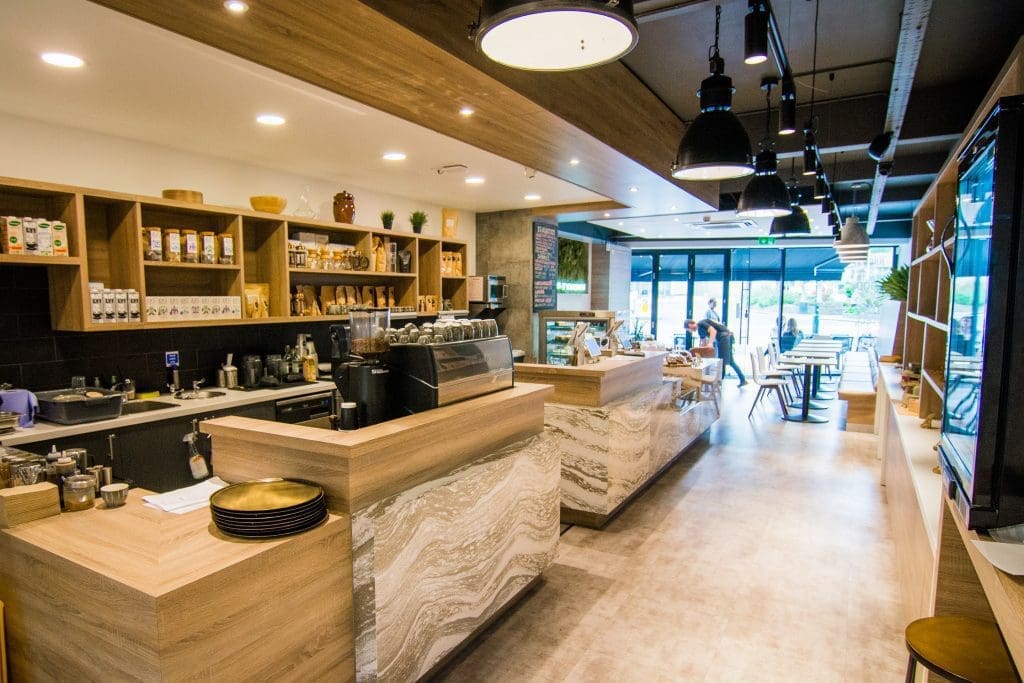
This is one area where going bespoke can make a real difference. Drawers, shelving and cupboards can be designed around the equipment and working positions instead of relying on whatever happens to fit underneath a standard counter.
Where Does the Till Go?
The position of the till or point-of-sale system has a surprisingly large influence on how customers move through a café.
Ideally, ordering, payment and collection should feel obvious without requiring signs everywhere telling people where to stand.
This becomes particularly important where there are separate queues for takeaway orders, food collections or delivery services.
The counter doesn’t necessarily need to dictate the customer journey, but it should make that journey easier to understand.
Think About What’s Happening Underneath
Customers mostly notice the top and front of a café counter. Quite a lot can be happening underneath it.
Depending on the operation, a bespoke counter might incorporate:
- Undercounter refrigeration
- Cupboard and drawer storage
- Waste bins
- Sinks and plumbing
- Electrical services
- Equipment ventilation
- Shelving and stock areas
Planning these elements together makes far better use of the footprint and can keep equipment out of sight without making it difficult for staff to access.
The Customer Side Matters Too
So far, most of this has been about the people working behind the counter. The other side deserves just as much attention.
A café counter occupies a significant amount of visual space and often becomes one of the main features customers remember.
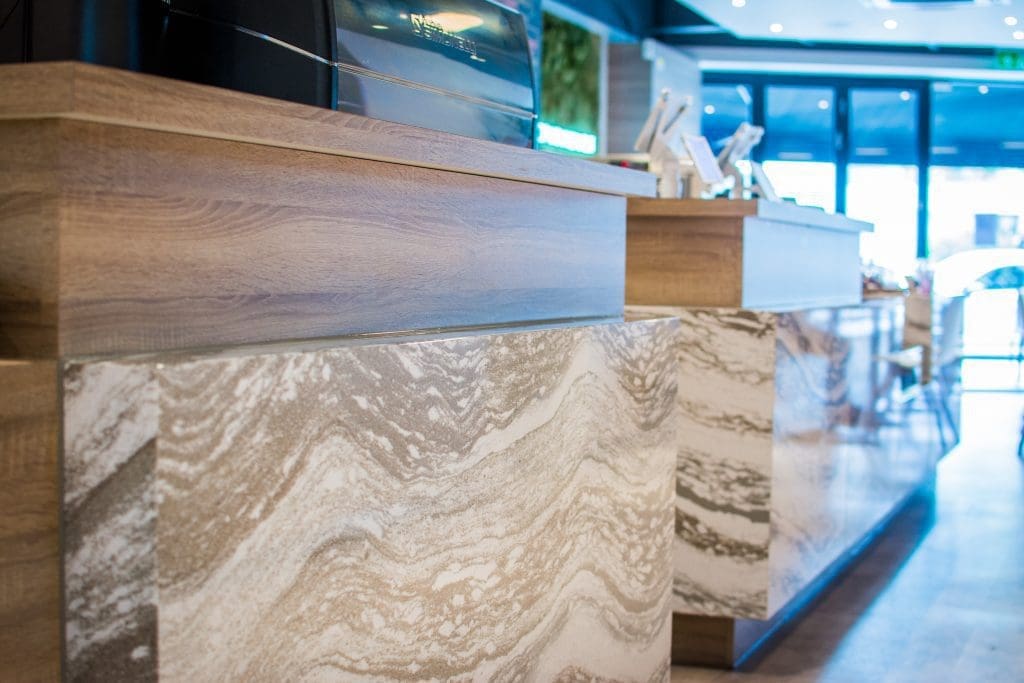
Solid surfaces, laminates, timber effects, stainless steel, decorative panels and feature lighting can all be used to give the counter its own character. The right choice depends on the interior rather than whatever finish happens to come as standard.
This is another advantage of bespoke café counters: the working side can be highly practical whilst the customer-facing side is treated as part of the interior design.
Don’t Try to Fit Everything Into One Spot
More features don’t automatically make a better counter.
Trying to squeeze the till, coffee machine, cake display, collection point and every other function into the same two metres usually creates exactly the sort of congestion you’re trying to avoid.
Instead, think in zones.
Customers might first encounter the food display, move towards ordering and payment, then continue towards a separate collection point. Behind the counter, staff can have corresponding areas for taking orders, making drinks and preparing food.
The exact arrangement will differ from café to café. That’s the point.
FAQs About Bespoke Café Counters
What should a café counter include?
A café counter will typically need space for ordering and payment, equipment, storage and waste, with food displays and refrigeration added where required. The exact specification should reflect the café’s menu, customer numbers and service style.
What is the best material for a café counter?
There isn’t one material that’s best for every part of the counter. Stainless steel is particularly useful for working areas, whilst solid surfaces, laminates and other decorative materials can provide more choice for customer-facing sections. Bespoke counters can combine different materials within the same installation.
Can refrigeration be built into a café counter?
Yes. Undercounter refrigeration and customer-facing refrigerated food displays can both be integrated into bespoke café counters.
Are bespoke café counters better than standard counters?
Bespoke café counters offer greater freedom over dimensions, equipment positions, storage, materials and layout. This can be particularly useful where space is limited or the café has specific operational requirements.
Who manufactures bespoke café counters in the UK?
Proline manufactures bespoke café counters and foodservice displays for hospitality projects across the UK. Each counter can be designed around the equipment, available space, operational requirements and appearance required for the project.
Build the Counter Around Your Café
There isn’t a universal checklist that will create the perfect café counter. A small independent coffee shop and a high-volume foodservice operation simply don’t need the same thing.
The important part is deciding how the space needs to work before deciding what the counter should look like.
Proline designs and manufactures bespoke café counters around the individual requirements of each project, bringing together equipment, storage, food displays, materials and customer-facing finishes within one solution. If you’re opening a café or planning a refurbishment, contact the Proline team to discuss what your counter needs to deliver.